rhfyt-1924b0-ac65da
Unravel the outer edges of coast and island and the crowded beaches fall away. Isolated islands, steep cliff lines and quiet shorelines still exist in places that take extra effort to reach, and the reward is usually space and the sound of water without the usual background noise. This piece stays with those farther shores, the cliffs that drop clean into the sea, and the simple realities of getting there and moving along them.
Places
Some islands sit far enough from the main ferry routes that the journey itself becomes part of the experience. Small harbours or simple jetties serve as the arrival points, and the settlements behind them often stay low and practical, built to handle wind and salt rather than large numbers of visitors. Cliff coastlines appear on both islands and mainland stretches. Certain sections offer marked paths that follow the edge at a safe distance, while others remain open ground where the walker chooses the line. Quiet shorelines tend to be found at the end of longer tracks or on the lee side of headlands where the swell drops and the sand or rock stays mostly empty. Access varies. One place may have a regular boat that runs when the weather allows, another only a seasonal service or the need to arrange a local crossing. The common element is the moment when the last busy harbour disappears and the horizon opens without much company.
Landscapes
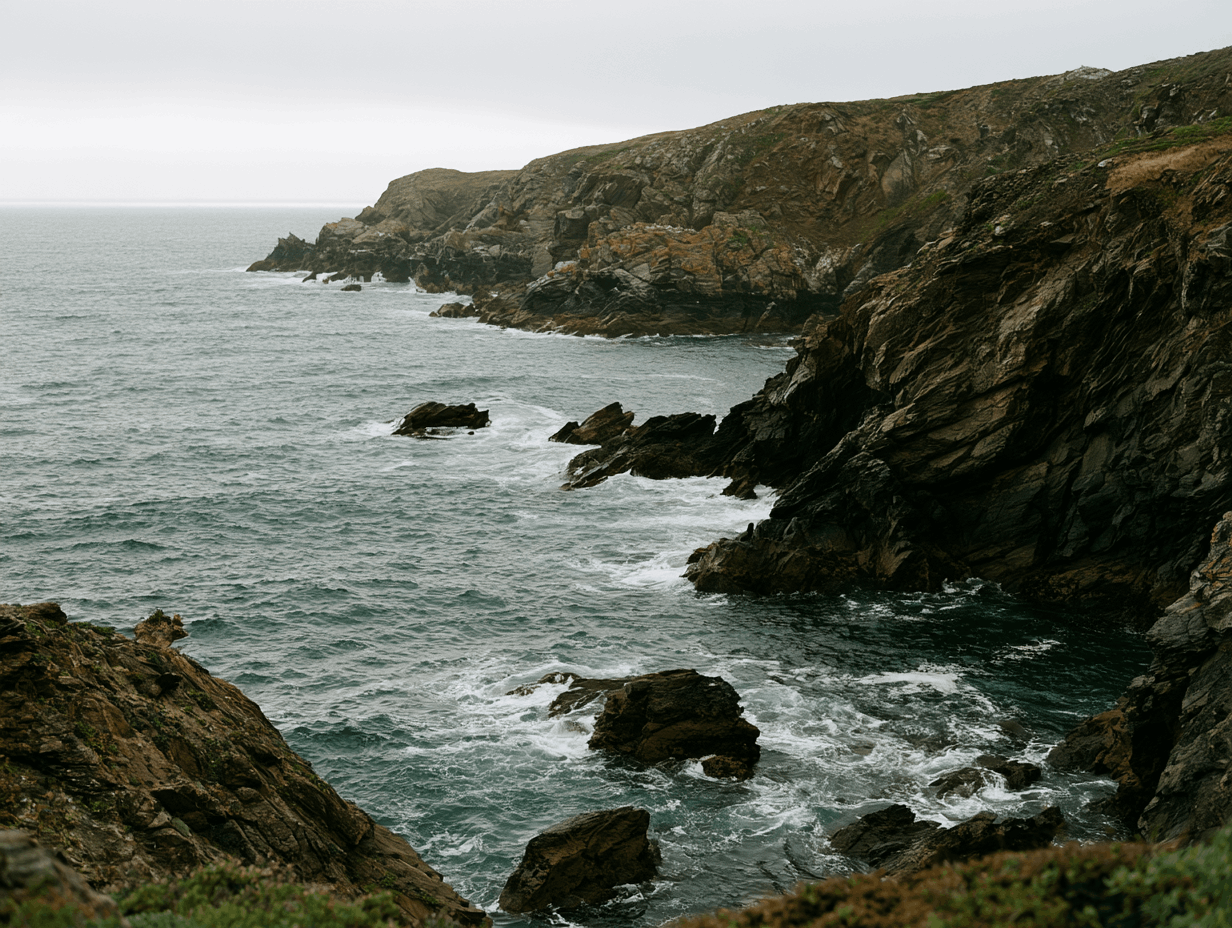
The land at these edges is shaped by wind and water more than by human planning. Cliffs rise in layered rock or drop in single dark faces, and the sea works constantly at their base. Some hold ledges and small stacks that remain accessible at low tide, others sheer off so cleanly that the only view is from above. Islands add their own compact versions of the same features. A single ridge may run the length of the land, with slopes that fall to boulder beaches on one side and finer sand on the other. Vegetation stays low and tough, shaped by salt and the prevailing weather. The light changes fast when clouds move in from the open water, and the colour of the sea shifts with depth and the angle of the sun. Quiet shorelines often appear where the cliffs step back or a bay curves out of the main force of the waves. The same stretch can feel completely different between a calm morning and a day of rising wind.
Cultures
Local habits around these places remain practical and low-key. People who live on the smaller islands or along the quieter coasts treat the weather as the main authority, and schedules for boats or work shift when the conditions demand it. Paths are often maintained by those who use them regularly rather than by large teams, and the expectation is that visitors will leave the ground as they found it. What frequently surprises outsiders is how ordinary the dramatic setting becomes for the people who see it every day. A cliff that draws quiet attention from a newcomer may simply mark the edge of a familiar field or the route home. Basic safety steps still matter. Keeping distance from undercut edges, watching the tide on lower shelves, and turning back when the wind rises remain more useful than any detailed equipment list. The same ground that offers the open view can become difficult once the weather turns.
Remote islands and cliff coasts do not need much interpretation once you are standing on them. The places give the access points and the settlements, the surrounding land and water shape the height and the quiet, and the local habits keep the visits workable. Spending time along a few of them usually leaves a clearer sense of how the edge of the land continues to hold its own character far from the busier shores.
Leave your email if you would like occasional notes about new stories and quiet destinations.
No frequent messages, just the ones worth reading.
© 2026 Unravel PLC LLC. All rights reserved.
