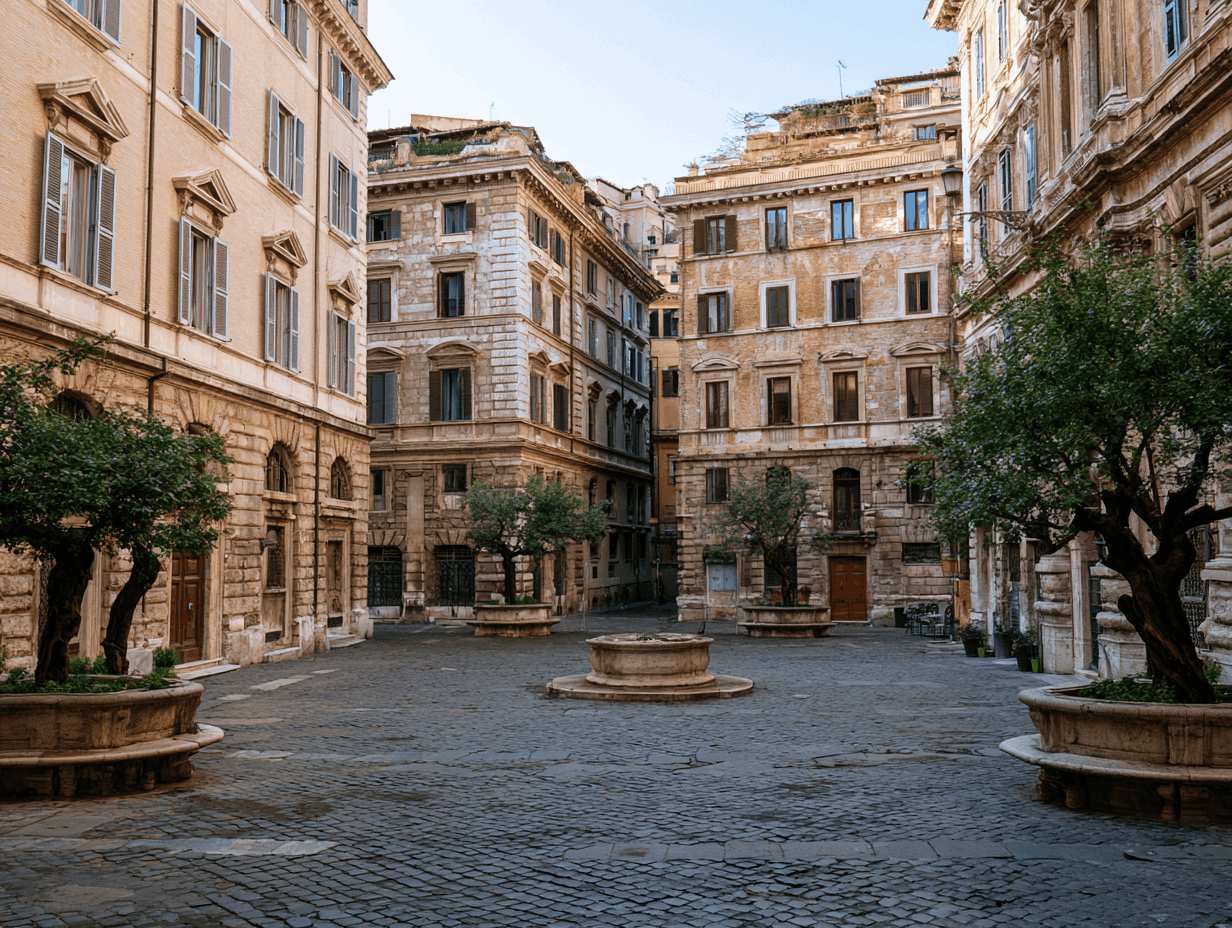
Italy rarely stays in one mood for long. One morning you can be walking through dense historic centres, by afternoon the road climbs into hills or drops toward the sea, and the food on the table changes with almost every region. This piece tries to open the country through its cities and quieter districts, the routes that still carry older patterns, the lakes and mountains, the coasts, and the everyday habits that shape how people live there.
Places
Rome holds the weight of centuries in its centre, yet the real texture sits a few streets away from the main squares. Trastevere keeps its narrow lanes and laundry hanging between windows, while the areas around Testaccio feel more lived-in and less polished. Florence concentrates its art and stone beauty in a compact core, but the Oltrarno side still has workshops and quieter residential streets where the pace slows. Venice is its own world of water and alleys, though the outer islands and the less visited sestieri offer corners where the crowds thin out. Further south Naples moves with a different energy. Its historic districts climb steep hills and spill into markets that seem to run on their own schedule. In the north, Turin and Milan show a more ordered face, with wide boulevards and industrial history still visible in the architecture. The routes between these places matter. The old road that follows the coast from Genoa down toward the Cinque Terre or the inland paths through Umbria still feel like they belong to an earlier map of the country.
Landscapes
Italy’s natural side is never far from the cities. The lakes in the north sit in deep valleys with steep shores. Como and Garda are the best known, but smaller ones like Iseo or Orta keep a quieter character and clearer water in places. The mountains rise quickly behind them. The Dolomites hold sharp rock faces and high meadows that stay green late into summer, while the Apennines run the length of the peninsula and create a more rugged, less visited backbone. Coastal landscapes shift constantly. The Amalfi stretch is steep and dramatic, with villages clinging to cliffs, yet further south the coastline opens into wider bays and longer beaches. Sicily adds its own volcanic presence and dry hills, while the islands of Sardinia and the smaller ones off the coast offer rocky shores and clear water that feel almost separate from the mainland. Historic routes often follow these natural lines. Old paths over mountain passes or along river valleys still connect villages that have kept their own pace.
Cultures
Food is the most immediate way into local life. Each region treats the same ingredients differently, and meals stretch longer than most visitors expect. In the north butter and rice appear more often, while the south leans on olive oil, tomatoes and seafood that arrives the same day. Markets still set the daily rhythm in many towns, and the habit of stopping for a quick coffee standing at the counter remains strong. Local festivals mark the calendar with processions, shared meals and small competitions that rarely make it into wider guides. People tend to speak with their hands and keep conversations close, yet the rules around greeting and table manners stay fairly consistent. Shoes come off less often than in some other countries, but arriving late to a meal is almost expected in certain regions. What often surprises outsiders is how much of daily life still revolves around the family table and the neighbourhood square, even in larger cities.
Italy does not present itself as a single story. The cities give density and layers of history, the landscapes open space and contrast, and the cultural habits fill the spaces between them with noise, taste and small rituals. Moving between the three is usually enough to start seeing how the pieces fit.
Leave your email if you would like occasional notes about new stories and quiet destinations.
No frequent messages, just the ones worth reading.
© 2026 Unravel PLC LLC. All rights reserved.
