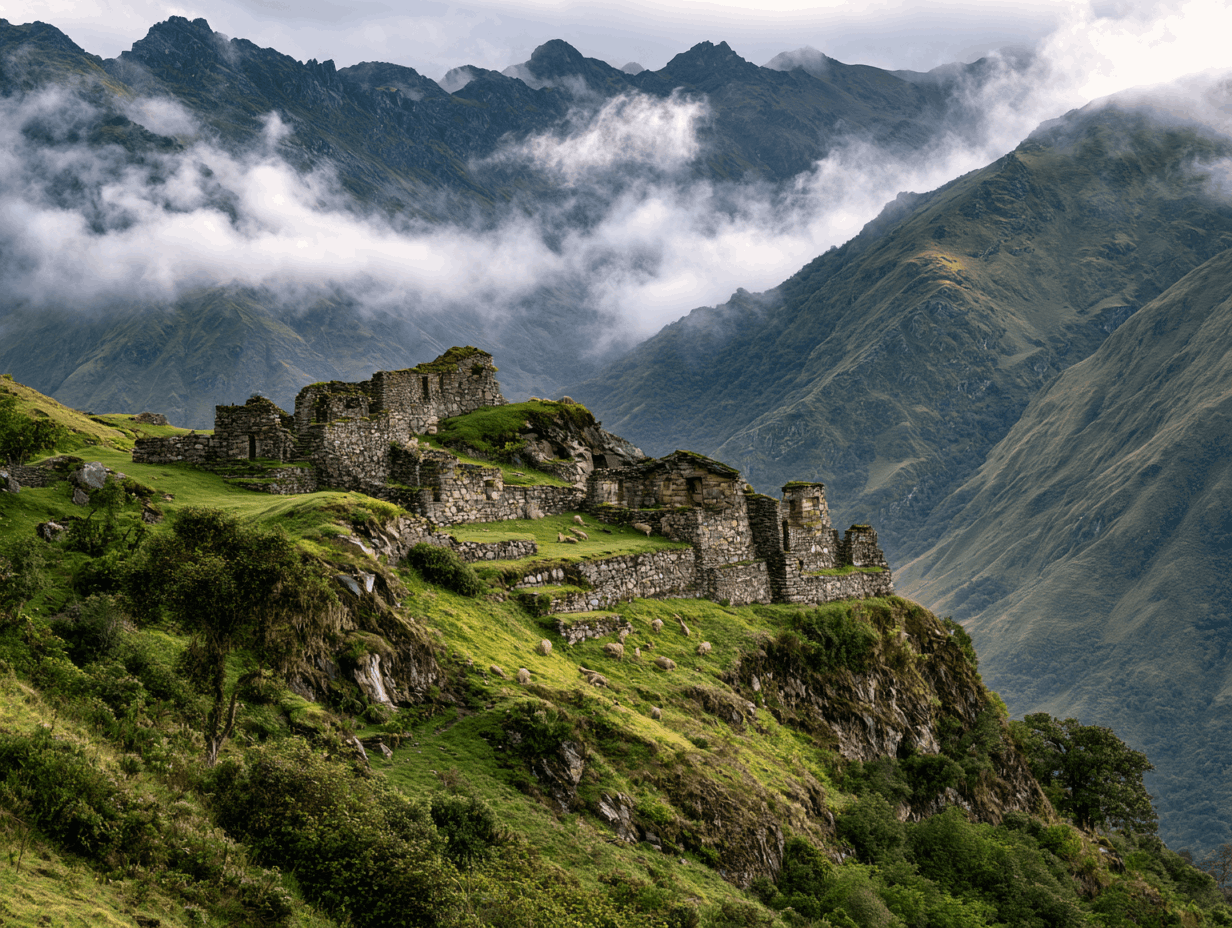
Unravel the quieter side of Peru and the famous site falls away fairly quickly. Most routes head straight for the classic citadel, yet the Andes hold villages, old stonework and valleys that see far fewer footsteps. This piece stays with those less marked places, the settlements that still run on local rhythms, the archaeological corners that sit off the main paths, and the remote stretches where the landscape opens without much company.
Places
In the Sacred Valley the better known towns draw the buses, but smaller settlements further along the river keep a different pace. Communities like those near Ollantaytambo’s outer edges or higher up toward the side valleys still grow maize and potatoes on terraces that have been worked for centuries. Further south around Cusco the road climbs toward quieter highland villages where the houses use adobe and stone, and the main square serves as both market and meeting point. North of the capital the Callejon de Huaylas holds towns that sit under the high peaks yet rarely appear on standard lists. Their streets stay narrow, the churches simple, and the daily traffic is more about local buses than long-distance tours. On the eastern slopes some settlements mark the edge where the highlands begin to drop toward the cloud forest, with paths that lead to smaller archaeological remains rather than the large reconstructed sites. These places often feel lived in rather than displayed. People still move between fields and houses on foot, and the shops stock what the surrounding land produces.
Landscapes
The valleys themselves carry much of the interest. Remote stretches of the Apurimac or the upper Urubamba open into steep sides and wide floors where the river runs cold and clear. High plateaus stretch between the ranges, covered in tough grass and dotted with small lakes that reflect the peaks when the weather holds. Quieter archaeological sites sit in these settings. Stone walls and circular foundations appear on hillsides that see few visitors, some still half buried under soil and grass. The scale can shift fast. One moment the path follows a cultivated terrace, the next it climbs into open puna where the air thins and the wind becomes constant. Cloud forest edges bring a softer contrast, with denser vegetation and the sound of water that never quite stops. Many of these valleys remain reachable only by rough tracks or longer walks, which keeps the traffic low and the sense of distance intact.
Cultures
Daily life in these corners still follows older patterns. Markets appear on set days and fill with produce carried in from the surrounding fields, often traded more than sold for cash. Food stays close to the land. Potatoes in many varieties, quinoa, and meat from animals that graze the high pastures form the base of most meals. Local customs around greeting and sharing remain strong. A simple exchange in Quechua or Spanish often opens the way more readily than any formal approach, and invitations to sit and drink can arrive without much ceremony. Festivals in these villages tend to stay small and tied to the agricultural calendar rather than wider calendars. What frequently surprises outsiders is how ordinary the extraordinary landscape becomes for people who live with it every day. Children walk the same paths to school, and the same stone walls that draw quiet attention from visitors serve as ordinary boundaries for animals and crops.
These corners of Peru do not compete with the famous site. They simply exist on their own terms. The villages give a human scale, the valleys and quieter ruins open space and history, and the local habits keep the days moving in familiar cycles. Spending time among them usually leaves a clearer sense of the wider country that sits beyond the main route.
Leave your email if you would like occasional notes about new stories and quiet destinations.
No frequent messages, just the ones worth reading.
© 2026 Unravel PLC LLC. All rights reserved.
