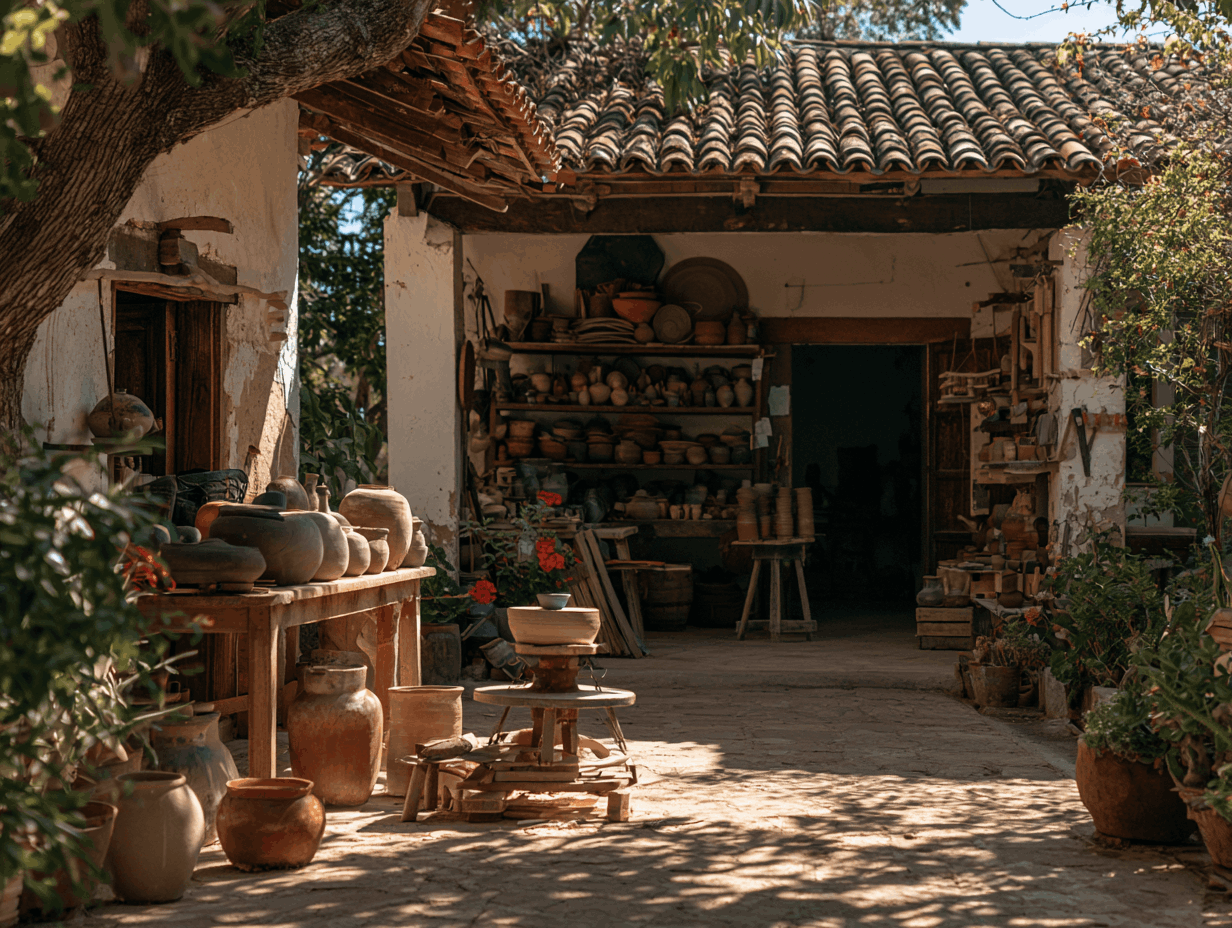
Unravel the quieter craft traditions of Mexico and the larger cities fall into the background. Smaller towns and indigenous communities still hold workshops where pottery, textiles and food are made by hand, often in the same spaces where daily life continues. This piece stays with those working places, the villages that keep older methods, and the simple exchanges that turn a visit into something more shared.
Places
In the central highlands and southern states the better known craft towns draw steady visitors, yet many smaller settlements keep their workshops closer to home. Pottery studios often sit in family courtyards where the clay is prepared, shaped and fired in kilns that have been used for years. Textile work appears in similar settings, with looms set up under simple roofs and the colours of the dyes coming from plants or minerals gathered nearby. Food experiences tend to stay practical rather than staged. A kitchen that produces mole or fresh tortillas for the household may open its door for a few hours so outsiders can follow the steps. These places rarely advertise. Word of mouth or a local contact usually opens the way, and the pace follows the work rather than a fixed schedule. In some indigenous communities the workshops remain tied to the agricultural calendar, so certain techniques appear only in particular seasons.
Landscapes
The setting for these crafts is rarely separate from the land around them. Villages sit in valleys or on gentle slopes where the materials themselves are close at hand. Clay pits, stands of plants used for dyes, and the open ground needed for drying finished pieces form part of the everyday view. Paths between houses stay narrow and often unpaved, with the same routes used for carrying water, firewood or finished goods to a weekly market. Higher or more remote communities add another layer. The air cools, the vegetation changes, and the workshops may share space with animals or storage for the harvest. The scale stays human. Distances that look short can take longer once the path climbs or the heat settles in, and the light shifts quickly when clouds move across the hills. These small landscapes of courtyard, kiln and loom hold the repeated gestures that keep the traditions working.
Cultures
Daily habits around the crafts carry more weight than formal instruction. Watching comes before doing, and a willingness to sit quietly for a while often leads to an invitation to try the next step. Food shared during or after the work tends to be simple and local, with the same ingredients that appear in the household meals. Greeting and thanks matter. A few words in the local language or even a clear effort to use them usually softens the exchange. Festivals in these communities often include the crafts themselves, with finished pieces carried in processions or offered as part of the celebration. What frequently surprises visitors is how ordinary the skilled work becomes for the people who practise it. Children may help with simpler tasks, and the same hands that shape a pot or weave a cloth also tend the fields or the animals. The distinction between craft and daily life stays thin.
These workshops and village traditions do not present themselves as performances. They simply continue as part of how people live and make a living. The places give the working spaces, the surrounding land supplies the materials, and the cultural habits keep the knowledge moving from one set of hands to the next. Spending time among them usually leaves a clearer sense of the country that exists beyond the main craft routes.
Leave your email if you would like occasional notes about new stories and quiet destinations.
No frequent messages, just the ones worth reading.
© 2026 Unravel PLC LLC. All rights reserved.
