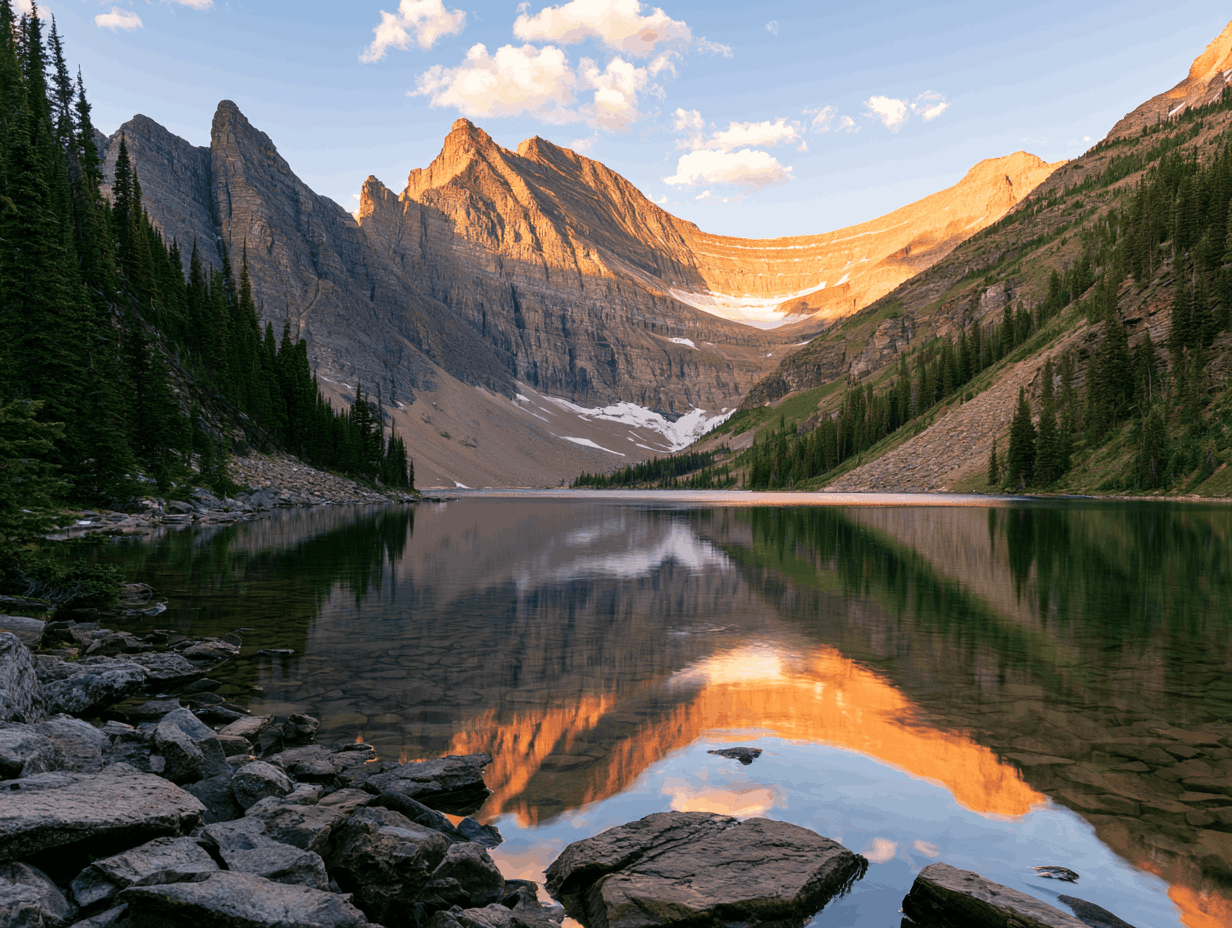
Unravel the wide open ground of certain national parks and the viewpoints begin to matter as much as the trails that reach them. Lakes set in high basins, mountain ridges that run clean against the sky, valleys that open without warning and the broad panoramas that pull the eye across distance still sit inside carefully chosen parks on different continents. This piece stays with those places, the lookouts that reward the walk, and the simple realities of moving through them.
Places
Some parks concentrate their strongest views along a handful of accessible ridges or lake shores. Marked paths lead to platforms or open rock where the land drops away and the water or the peaks take over the frame. Others keep the best viewpoints further from the main entrances, so the day involves more walking and a greater chance of having the spot to yourself for a while. Valleys inside these parks often serve as the approach. A long gradual climb through forest or open grass can end at a sudden edge that reveals the full spread of water and rock. Access rules vary. Certain parks limit numbers or require permits for the higher routes, while others remain open with only basic guidance on the ground. The common element is the moment when the path levels or turns and the panorama appears without much buildup.
Landscapes
The land itself shapes the quality of the view. Lakes that sit in glacial basins reflect the surrounding ridges when the air is still, and the colour of the water shifts with depth and the light. Mountain ridges provide the long lines that draw the eye, some sharp and rocky, others softer and covered in low vegetation. Valleys cut between them create depth, so the panorama gains layers rather than staying flat. Weather changes the same scene from one hour to the next. Clear mornings can give the farthest peaks a sharp outline, while afternoon cloud may settle into the valleys and leave only the higher ground visible. The scale stays large. Distances that look manageable from a viewpoint can take hours to cross, and the sense of space grows once you leave the marked edge and continue along the ridge or the shore. These landscapes reward slow movement more than constant progress.
Cultures
Local habits around these parks tend to stay practical and quiet. Paths are maintained to protect both the ground and the experience of those who come later, and the expectation is that people will keep noise low and leave no trace of their stop at a viewpoint. What frequently surprises visitors is how ordinary the dramatic setting becomes for the people who work or live near the boundaries. A panorama that stops outsiders for long minutes may simply mark a familiar weather sign or the route toward higher pastures. Basic safety steps remain useful. Checking conditions before committing to an exposed ridge, carrying water and an extra layer, and turning back if the weather closes in still matter more than any detailed schedule. The same ground that offers the open view can become difficult once wind or cloud arrives.
National parks with strong viewpoints do not need much explanation once the land opens in front of you. The places give the access and the paths, the surrounding lakes ridges and valleys shape the depth of the scene, and the local habits keep the visits workable. Spending time at a few of them usually leaves a clearer sense of how wide natural panoramas continue to hold their power across different kinds of ground.
Leave your email if you would like occasional notes about new stories and quiet destinations.
No frequent messages, just the ones worth reading.
© 2026 Unravel PLC LLC. All rights reserved.
