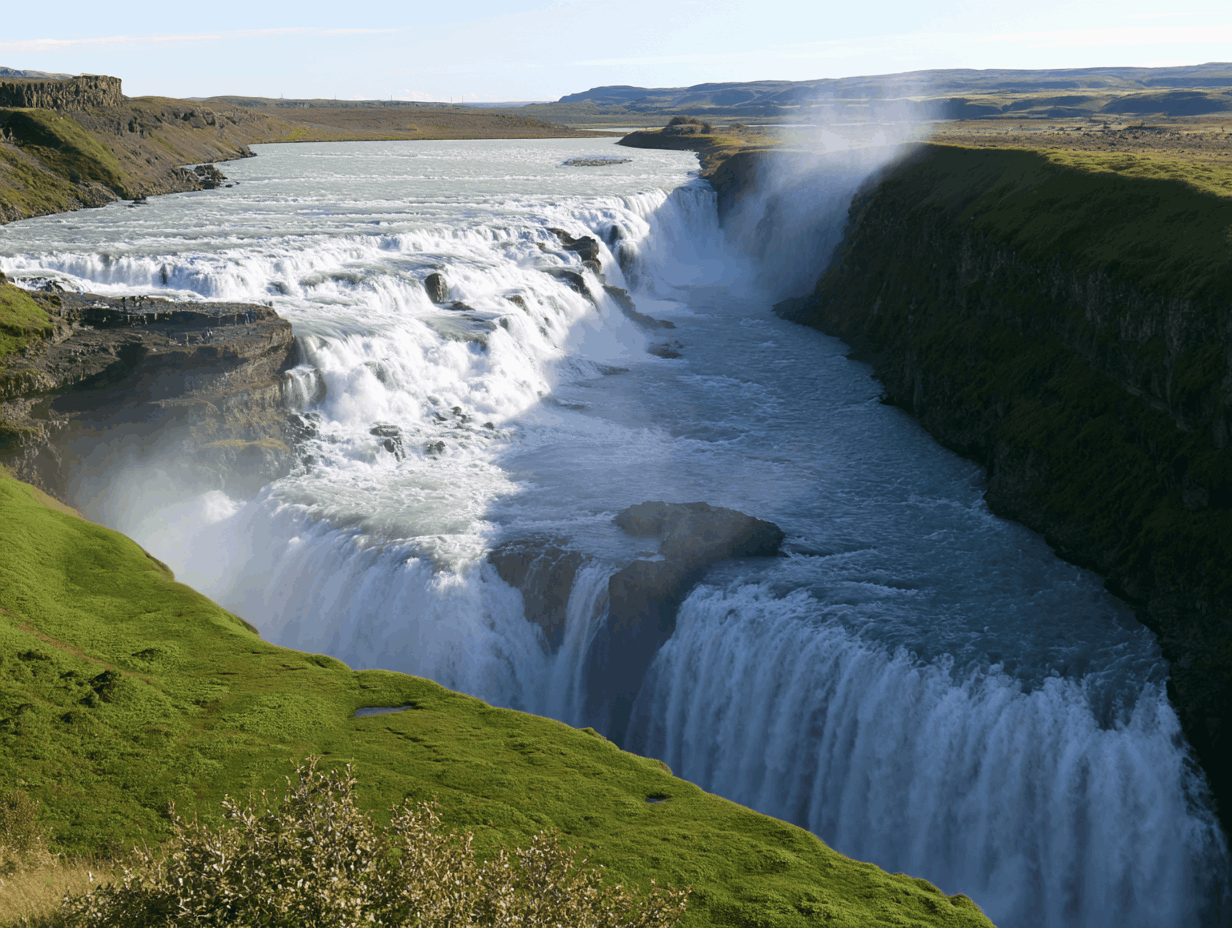
Unravel the force of falling water and deep cut rock and the scale becomes clear quickly. Iconic waterfalls and quieter ones, together with canyons that drop away from the rim, appear across different continents and still hold the power to stop a walker in their tracks. This piece stays with those places, the viewpoints that open without warning, and the simple realities of reaching them.
Places
Some waterfalls draw steady attention because the approach is straightforward and the drop is dramatic. Others sit further from the main routes and require longer walks or rougher tracks before the sound of water grows loud enough to guide the final stretch. Canyons follow a similar pattern. Certain rims are reachable by ordinary roads and offer wide platforms, while deeper or narrower systems demand more careful footing and extra time. Viewpoints often sit at the edge of these features. A simple path may lead to a rock outcrop that suddenly reveals the full height of a fall or the layered walls of a gorge. In different continents the access changes. One place may have marked trails and basic facilities, another only a faint path and the need to carry everything required for the day. The common thread is the moment when the ground opens and the water or the depth takes over the view.
Landscapes
The land around these features shapes how they feel. Waterfalls that plunge over hard rock create deep plunge pools and spray that keeps the surrounding vegetation green even in drier seasons. Softer stone produces wider curtains and more gradual drops that spread across the face. Canyons cut by rivers over long periods show clear layers in their walls, and the light moves across them differently as the day advances. Some remain narrow and shadowed for much of the time, others open wide enough that the far side stays visible in detail. The approach landscapes matter too. High plateaus leading to a rim, forested slopes that hide the fall until the last minutes, or dry ground that makes the sudden water feel sharper all change the experience. Weather plays its part. Heavy rain can turn a moderate fall into something more powerful, while dry periods reduce the flow and reveal more of the rock behind it. The same site can look and sound different from one visit to the next.
Cultures
Local habits around these places tend to stay practical. Paths are often maintained by the people who live nearby or by small teams that keep the worst erosion in check. Attitudes toward noise and litter remain fairly consistent, and following the simple practice of leaving the ground as it was usually matches what the surrounding communities already expect. What frequently surprises visitors is how ordinary the dramatic setting becomes for those who see it regularly. A waterfall that stops outsiders in their tracks may serve as a familiar landmark for people who pass it on the way to work fields or tend animals. Safety steps stay basic yet important. Staying behind any marked edges, watching the surface when rock is wet, and turning back if conditions shift still matter more than any detailed plan. The same ground that offers the view can become difficult quickly once rain or wind arrives.
Waterfalls and canyons do not need much explanation once they are in front of you. The places give the access and the viewpoints, the surrounding land shapes the force and the depth, and the local habits keep the visits workable. Spending time at a few of them, both the well known and the quieter ones, usually leaves a clearer sense of how water and rock continue to cut and fall across different parts of the world.
Leave your email if you would like occasional notes about new stories and quiet destinations.
No frequent messages, just the ones worth reading.
© 2026 Unravel PLC LLC. All rights reserved.
